

You’ve probably spotted a tiny semicolon on a jacket, bag or wrist and wondered what it says. The mark is easy to spot, but its meaning gets fuzzy once it’s on a pin, a tattoo or a necklace.
In this article, we’ll cover what it stands for, how designs change it, and the grammar and slang meanings.
What the meaning of a semicolon pin says about survival
A semicolon links two sentences that could each stand alone. The writer could have used a full stop and didn’t. That’s the point: a hard chapter can be followed by another one.
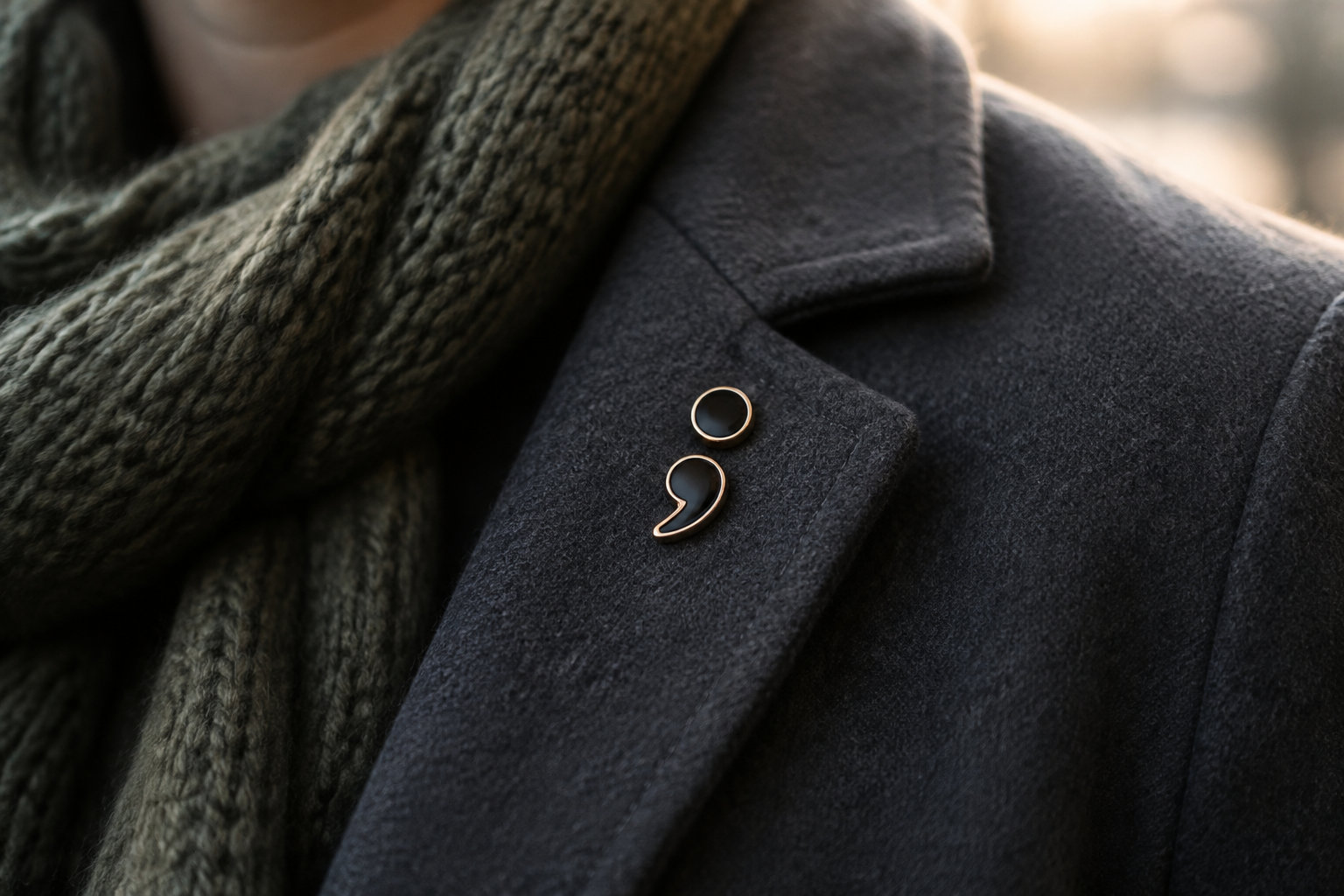
So a semicolon pin can stand for a rough stretch that isn’t the last one. Some wear it to remember someone, others to mark a chapter they got through. Keep the short version ready, because someone will ask.
You don’t need ink to carry the message. A semicolon pin on a jacket, bag or backpack can signal survival, encouragement or solidarity, and it also shows support for people facing anxiety, addiction or depression.
For mental health pins that carry this message, see how to choose a pin that fits your message.
Why a punctuation mark became a mental-health symbol
Who knew a little dot-and-comma could start a movement? In 2013, Amy Bleuel founded Project Semicolon and used the mark as a reminder that a story can keep going.
The symbol spread online that same year and became an invitation to talk about mental health and hope. Not bad for a mark most of us barely used after school.
The sentence after a semicolon keeps going. A U.S. military article uses the mark for a point where a life could have ended, but the person chose to keep going.
Don’t read a whole biography into one dot and a comma. A pin can start a conversation, but the wearer decides whether to explain it. Take it as an opener, and wait for the wearer to bring up the story.
Do arrows, hearts and butterflies change the tattoo message?
Adding an arrow, a heart or a butterfly doesn’t cancel the semicolon. People usually get one for their own struggle and survival, or to show solidarity with someone affected by suicide, depression or addiction.
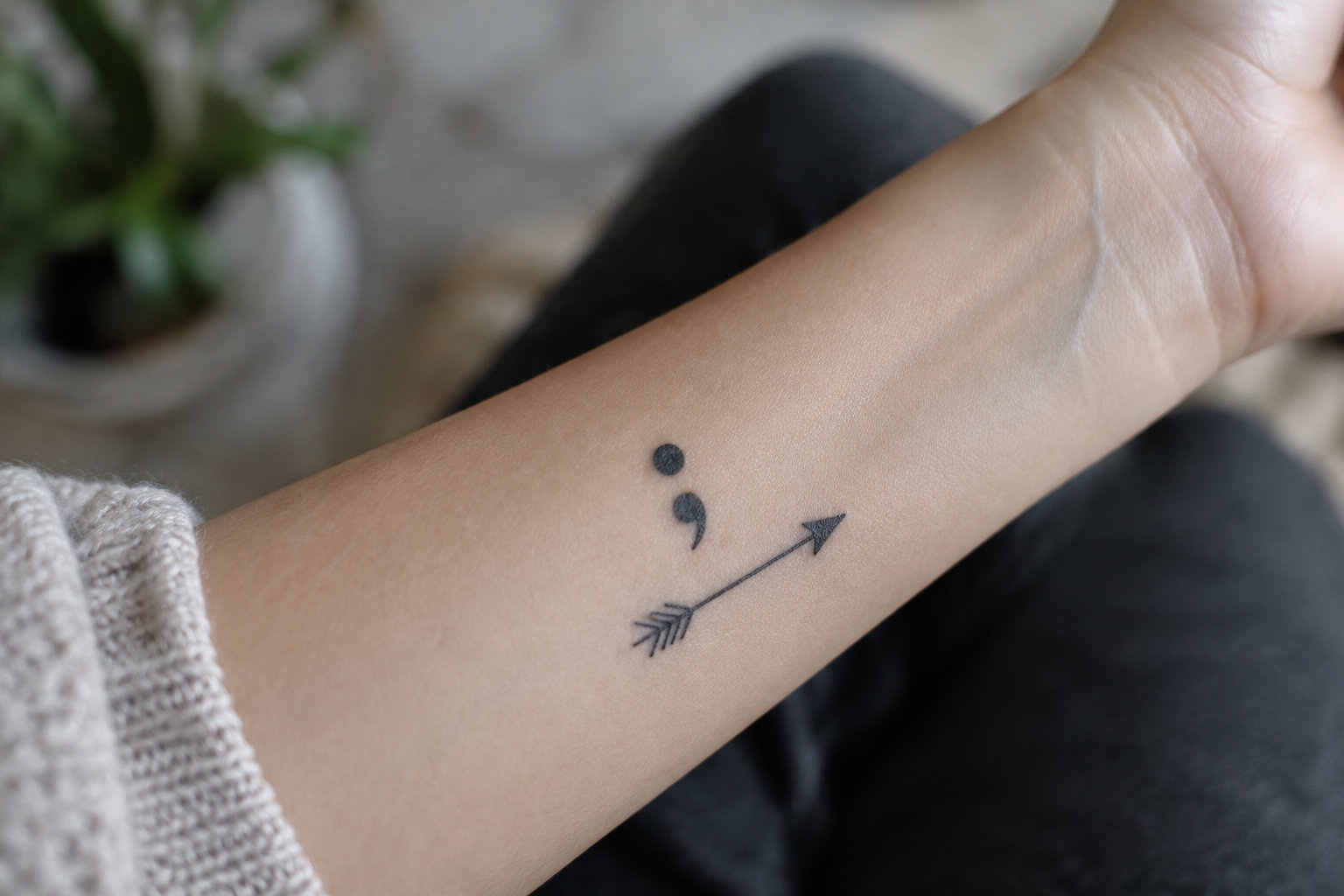
Project Semicolon sets no required design and no required history, so nobody checks your backstory at the door, thankfully. Keep the design simple: the mark already says what you need it to say.
Each motif means what its wearer gives it, so here is how people usually read the common ones:
- An arrow often means moving forward.
- A butterfly often stands for change or transformation.
- A heart often stands for love or strong feelings.
- A heartbeat line, a lotus, a word, a date or initials make the tattoo more personal still.
- Project Semicolon gives none of these motifs an official meaning, so the final reading is yours.
Three dots on the finger: ellipsis, straight line or triangle
Three dots in a row: the ellipsis
Three dots in a row are an ellipsis, not a semicolon. In English writing, an ellipsis marks words left out of a quotation, or a pause or a thought that trails off.
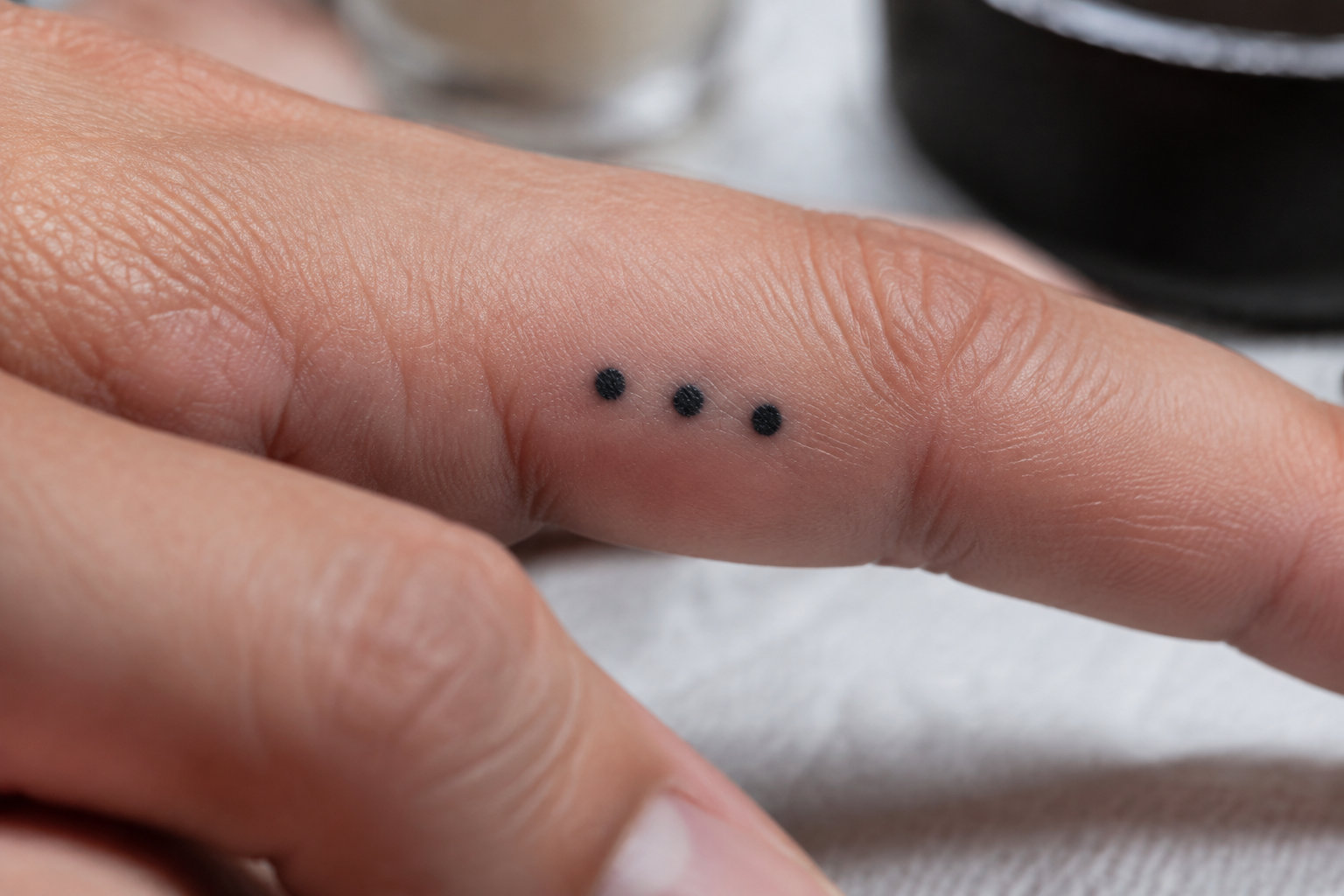
Spot the difference fast: a semicolon has a comma-shaped mark under its top dot, and an ellipsis doesn’t.
So if your pin or tattoo shows three plain dots in a line, it reads as an ellipsis. Some people use it for an unfinished thought or a story still going, but expect people to ask what it means.
Three dots in a straight line
Three dots in a straight line have no official meaning, and none of these readings comes from the semicolon. Here is what the row can say.
| Criterion | Unfinished journey | Change | Three people or moments |
|---|---|---|---|
| What the row stands for | A path that is still going | A line from before to after | Three names, dates or memories that matter to the wearer |
| Fits a wearer who | Is still on the road | Has moved on from a phase | Wants to honor three specific people or moments |
| Quick check | Does the line feel open-ended? | Is there a clear turning point? | Can the wearer name all three? |
Three dots arranged as a triangle
Three dots arranged as a triangle are a different story.
In some U.S. gang and prison settings, this design has been linked to mi vida loca, Spanish for "my crazy life." Spot one on a stranger’s wrist and you can’t assume it’s a semicolon fan club.
The triangle can also carry a personal meaning for the wearer, and only they know it. Ask them before you read anything into it. If you want the semicolon message, get the semicolon itself and leave the triangle alone.
The grammar rule that gives the metaphor its logic
A semicolon joins two independent clauses, sentence parts that could each stand alone. The break is stronger than a comma but weaker than a full stop.
It also splits long list items that already have commas inside, which saves everyone some squinting. Most writers use it too little, so put one where two clauses are tightly linked.
Read the words before the semicolon. Do they make a full sentence on their own?
Read the words after it. Do they finish the same thought?
Try "The rain stopped; the streets stayed wet." Both halves stand alone, yet they form one story.
Try "We visited Albany, New York; Dover, Delaware; and Salem, Oregon." It only ends after "Oregon."
What a semicolon pin tells others, and what it does not
A semicolon pin can show support for people dealing with mental-health struggles or suicide risk. It can also honor someone you lost, or mark a rough period you came through.
The pin won’t say which story is yours. People will guess, and they’ll often guess wrong, which is fine. Wear it, enjoy the questions, and share your story only with people you trust.
Don’t guess a romantic or slang meaning, and don’t ask a stranger "Who did you lose?" just because they wear a semicolon. Asking that can force them to relive something they never agreed to share. If they want to talk, they’ll bring it up, and the mark only starts the conversation.
Mission accomplished: you now know more about this little mark than most people who wear it. Keep the short version handy, let the wearer lead the talk, and don’t play detective on a stranger’s wrist.
Your next step is easy: choose a pin that feels like you, and let people ask first.
Frequently asked questions
What does a semicolon arrow tattoo mean?
A semicolon arrow tattoo usually means the story is still going, with the arrow adding the idea of moving forward. Wearers often read it as: I got through a hard stretch, and I’m heading somewhere now. Ask the wearer first.
What does a 3 dots tattoo on the finger mean?
Three dots in a straight row on a finger usually read as an ellipsis, or as a personal code only the wearer knows.
A triangle is different: some gang and prison groups use that layout. Ask the wearer before you read anything into it.
What does a semicolon mean in the English language?
In English, a semicolon joins two sentence parts that could each stand alone but belong to the same idea.
It also splits list items that already contain commas. Most people use it too rarely, so try one where you’d reach for a full stop.
What does it mean when a girl has a semicolon tattoo?
Usually, it marks a story that didn’t end at a hard point. It can stand for personal survival, remembrance of someone lost, or support for others. Don’t assume her history from the ink: she doesn’t owe you the backstory.
0 reacties