

That little peg at the bottom of your acoustic guitar holds one end of every string, and most players don’t think about it until it goes wrong.
Pick the wrong pin and it wobbles, the string buzzes, or it pops out mid-song, which is not the vibe.
Below, you’ll find the pins worth buying in the US, how ebony, bone and synthetic differ, and what to do when a pin is loose or too big.
Which pin to pick for your budget, tone and setup
Want real ebony without spending much? Waverly or Elderly, both under $20. Want a brighter sound? Bone from Waverly or Elderly, and Elderly’s slotted set is $49.70.
Need zero surprises? TUSQ at $23.71 is the pick, since every piece matches. Want pins that look the part?
Allparts Camel Bone, $44.39, is a fun one. Fit comes first, so check the taper and diameter before you choose on sound or looks.
Most replacement pins use a 5-degree taper, but TUSQ Traditional pins use a 3-degree one, so never assume. Ebony can look amazing, but a pin that wobbles looks worse.
Check the taper and diameter of your bridge holes.
Match both to the pin’s specs before you buy.
Only then compare the material.
Waverly Ebony Bridge Pins: the best budget ebony pick
Want real ebony without paying a fortune? Waverly Ebony is the cheap route. A six-pin set starts at $17.89 unslotted, or $19.39 slotted, with a 5-degree taper. The slotted pins have a 0.070-inch (1.78 mm) slot.
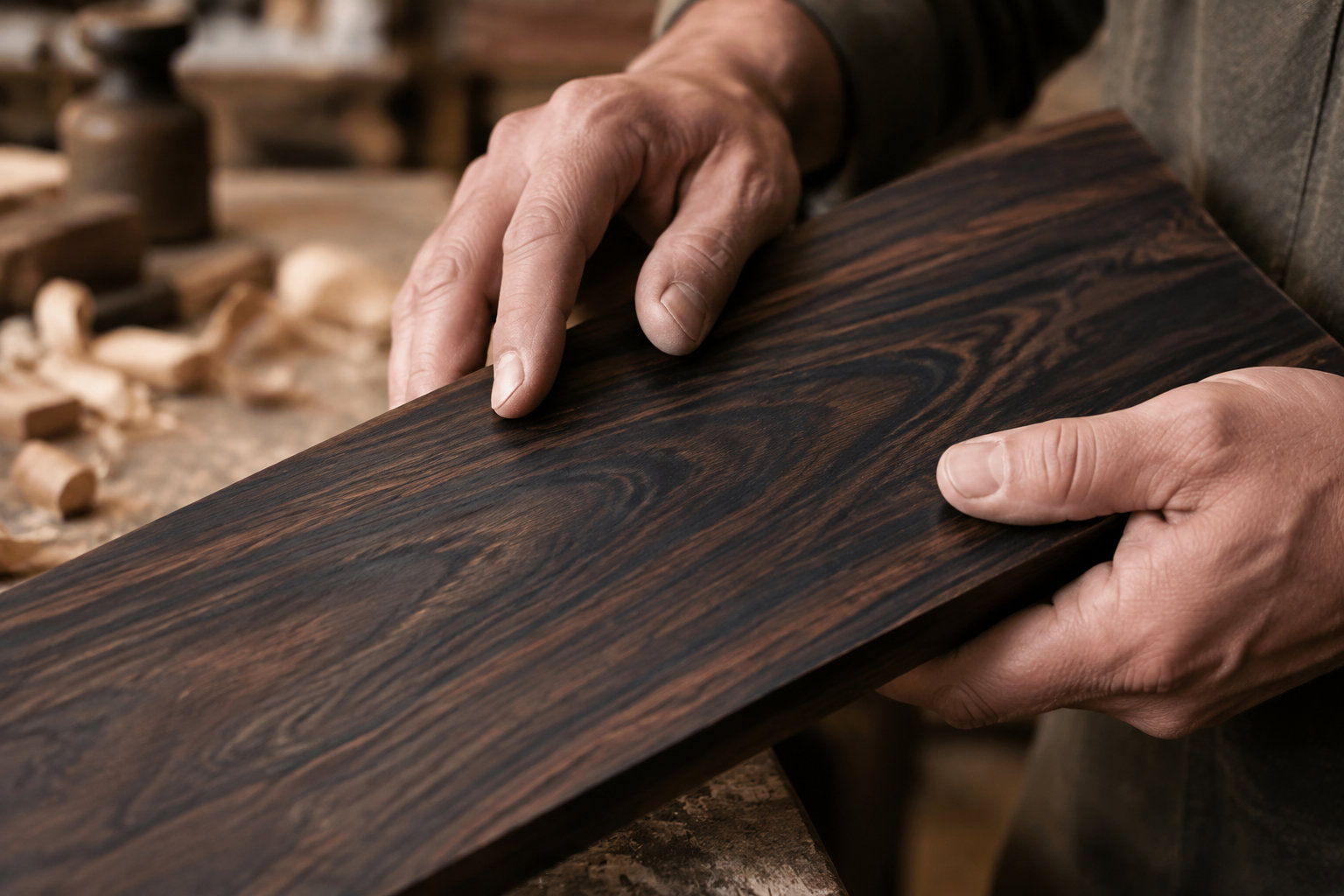
Which slot? It depends on your bridge and string path. Ebony may sound warmer, but plenty of players hear no difference. Strings bending over the pins? Go slotted. Otherwise, unslotted saves a few bucks.
Five Waverly Ebony six-pin sets, and that white dot will cost you extra. Here’s the lineup, side by side.
| Option | Unslotted, no dot | Slotted, no dot | Slotted, oversized | Unslotted, white dot | Slotted, white dot |
|---|---|---|---|---|---|
| Slot | Unslotted | Slotted | Slotted | Unslotted | Slotted |
| Dot | No dot | No dot | No dot | White dot | White dot |
| Price (USD) | $17.89 | $19.39 | $19.19 | $22.99 | $25.29 |
Waverly Bone Bridge Pins: the best bone upgrade
Bone costs more than ebony, so you want a reason. Bone pins tend to sound brighter and clearer, with a bit more sustain and resonance. Not every guitar reacts the same way, so trust your ears over the description.
Dull, tired tone? Bone is worth the extra cash. Already happy with your sound? Skip it and put the money into a fresh set of strings.
Which one do you need? Pick the variant that matches your bridge and string path:
- Unslotted, no dot: $53.89. The cheapest Waverly Bone option, for bridges that don’t need a slot.
- Unslotted, black dot: $56.09. Same pin with a black dot on the head, so only the look changes.
- Slotted, no dot: $55.89. Has a 0.070-inch (1.78 mm) string slot.
- Slotted, black dot: $57.39. Slot and dot together, the priciest of the four.
Graph Tech TUSQ Traditional Bridge Pins: the most consistent synthetic option
Hate surprises? Then TUSQ is your pin. Each pin matches the last, so the set you open is the set you’ll get next time. It’s also made without animal by-products, which settles it for vegan players.
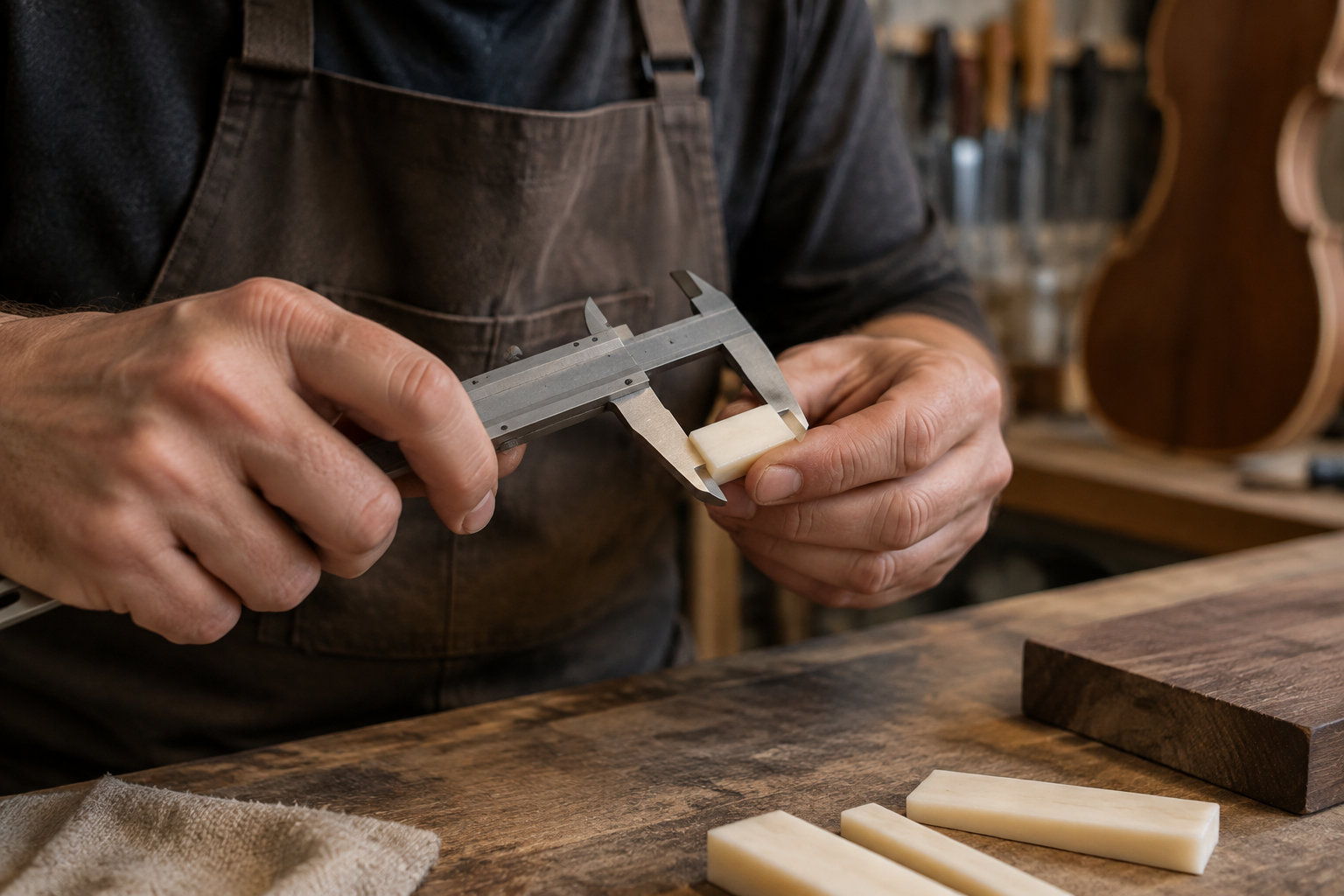
Six pins cost $23.71 plain, $27.45 with a 2 mm white dot, or $30.75 with a 2 mm mother-of-pearl or Paua dot.
Dots only change the look. Want zero drama? Buy the plain set and spend the difference on strings.
Check the fit first
-
Shank diameter
TUSQ Traditional pins measure 5.33 mm (0.210 inches) across the shank.
-
Your bridge hole
Measure it with calipers before you order. Not 5.33 mm? Skip them, no drama.
-
Taper
Also check the 3-degree taper against your holes. A pin can match the diameter and still sit wrong.
Allparts Camel Bone Bridge Pins: bone with looks to match
Allparts Camel Bone is bone with visual flair, in a camel tone. Six slotted pins and one end pin cost $44.39. Slotted means the string sits in a groove in each pin.
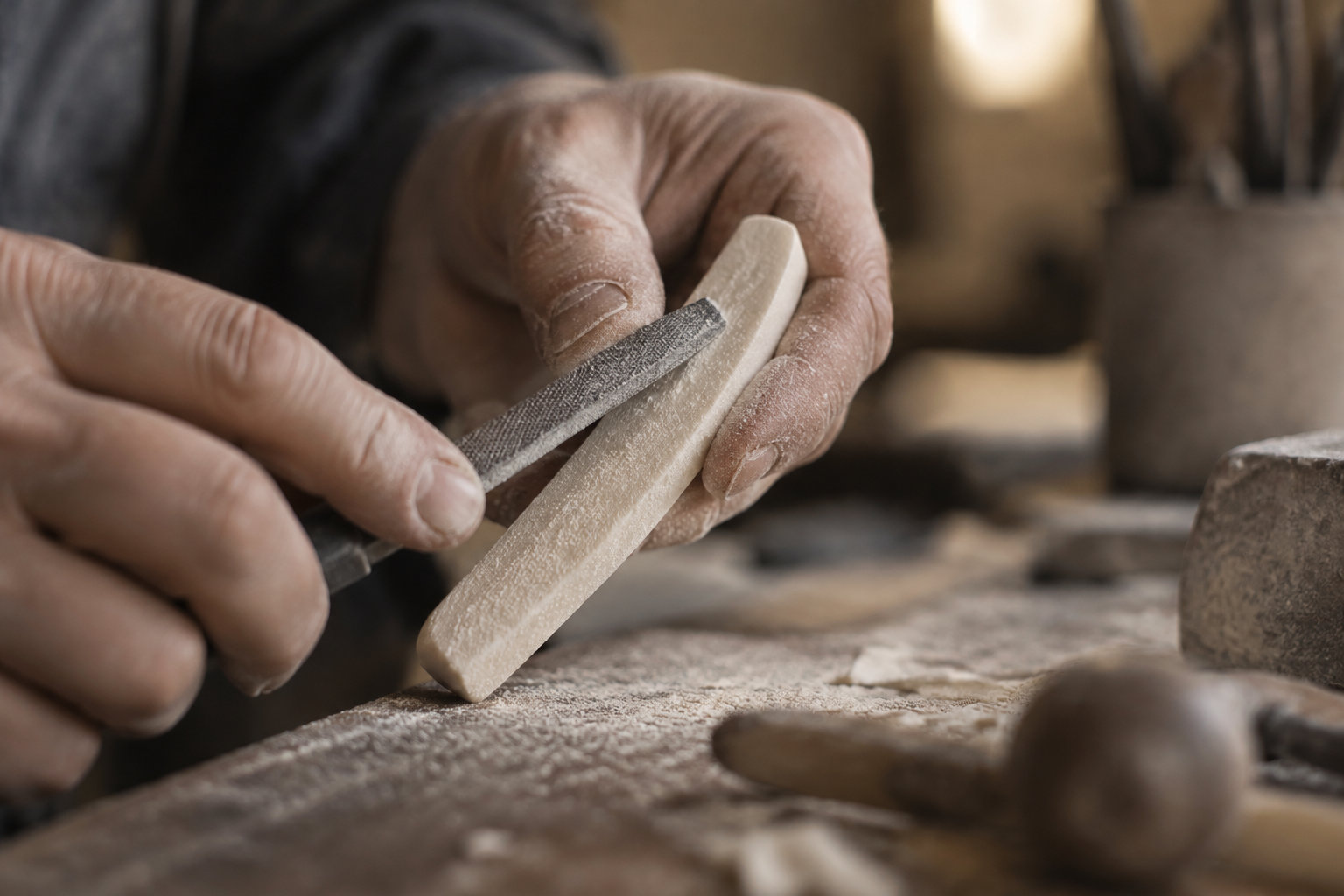
Check taper and diameter against your holes first, because a pin that does not fit is useless, no matter how good it looks. If your bridge is on show, this set is an easy call.
The dot only changes the look, not the taper or diameter, so pick by style from these four:
- No dot, for a clean, plain bone look.
- Mother-of-pearl, for a soft, shimmering finish.
- Abalone, for a more colorful flash.
- Ebony, for a dark contrast that stands out.
Elderly Instruments Slotted Bone Bridge Pins: a no-fuss bone set
Want bone without the fuss? Elderly’s slotted bone set gives you six pins for $49.70, with a standard 5-degree taper. Bone costs more, but this is the easy way in.
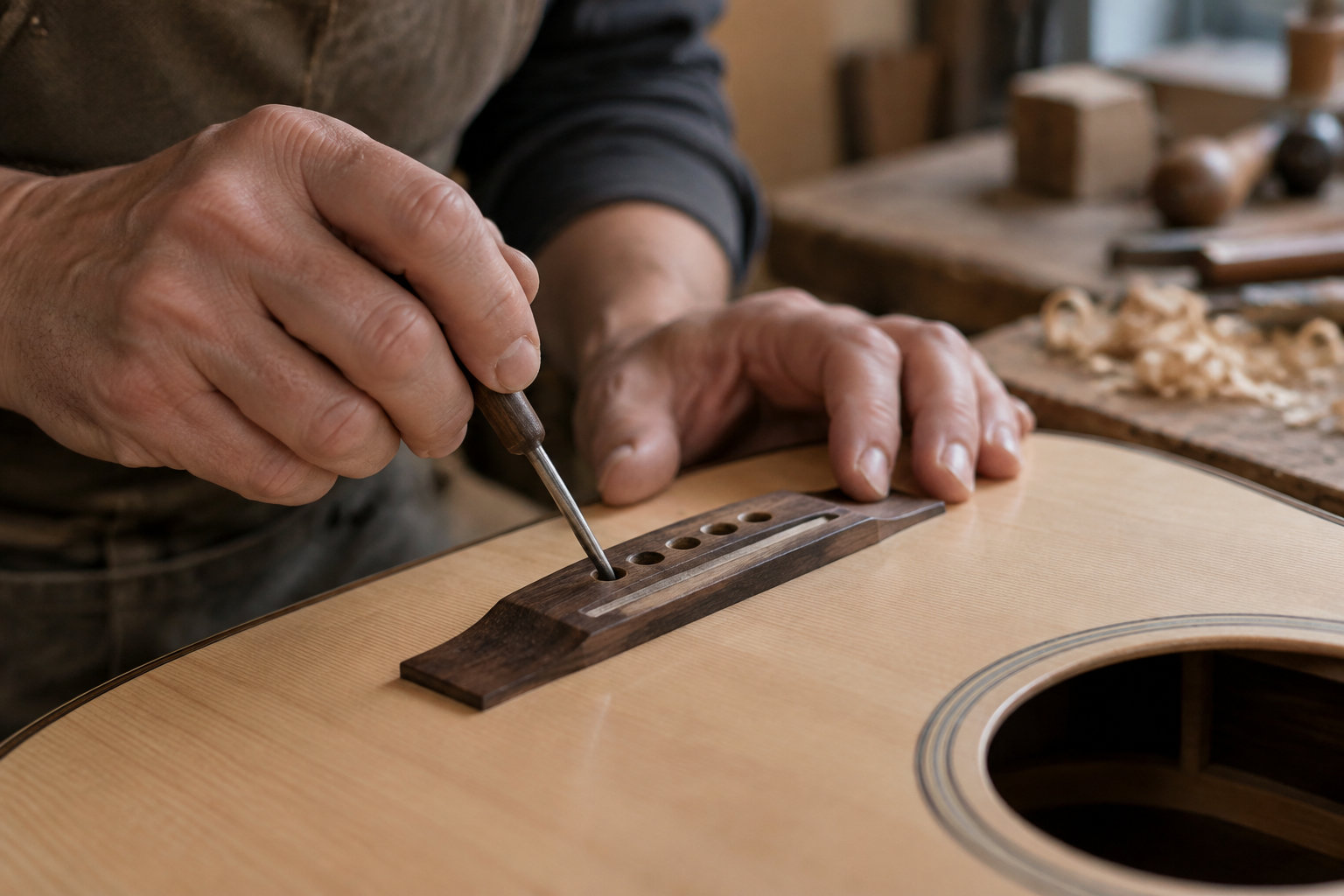
The taper still has to match your bridge, so compare a current pin to the new set before you buy. Verdict: if it lines up, buy it and stop scrolling, your wallet will thank you.
If a pin won’t fit
Compare with your current pin
Hold the new pin next to an old one. Same taper and diameter? Then you’re good to go, no guessing needed.
Never force it
Stop at the first hard resistance. Pushing harder can damage your bridge, and that’s a far pricier fix.
Call a repair pro if it sits high or feels loose
Ask them to check the fit. You’re done when they confirm it sits flush.
Elderly Instruments Ebony Bridge Pins: economical slotted ebony
Want real ebony without the big price? Elderly’s six slotted ebony pins cost $18.80, the cheapest slotted set in this list.
Their 5-degree taper matches Martin plastic bridge pins, so if your guitar came with those, the fit is already on your side.
Your bridge holes still get the final say. If they match Martin plastic pins, buy these and stop comparing.
Worn-out holes? Elderly’s six oversized slotted ebony pins are made for that, at $18.70, so keep three things in mind:
- Oversized means they’re thicker than standard pins, so they fill a stretched hole. Measure your holes before you order.
- Test the tone claim yourself. Play the same chords before and after the swap and decide if you hear a difference.
- A loose pin can fall out, and a pin that sits high points to a sizing problem. Never force either one into the bridge.
Fit comes first, every time. A pin that wobbles ruins your tone, no matter how pretty it is. Measure your bridge holes, then pick the material and look you like.
Ready to buy? Grab your calipers, check your holes, and only then add a set to your cart. That white dot is tempting, but fit still wins.
Frequently asked questions
Can I change bridge pins without changing strings?
Yes, you can, and you don’t need new strings. Loosen the string, change one pin at a time, then tune the string again. Working one pin at a time keeps the other strings anchored while you work.
My bridge pin won’t stay down. How can I fix it?
Make sure the string’s ball end is seated against the bridge plate, then gently pull the string up as you tune.
Still loose, or won’t seat with gentle pressure? Stop there. Forcing it can wreck your bridge, so don’t go there!
My guitar bridge pins are too big. What should I do?
Don’t force them in, because that can wreck your bridge. Instead, check the taper and diameter of your holes against a pin that fits, then buy to match.
Still stuck? Ask a guitar repair pro to fit the bridge for you.
0 comentarios